


What Young People Wish People Knew About Cerebral Palsy
To mark World Cerebral Palsy Day on 6 October, we’re sharing what young people wish more people understood.
Cerebral palsy doesn’t look the same for everyone, and that’s exactly why listening matters. It is one of the most common lifelong physical disabilities, but it is still widely misunderstood.
For many young disabled people, including young wheelchair users, cerebral palsy is just one part of who they are. It does not define their friendships, talents, ambitions or future. To mark World Cerebral Palsy Day on 6 October, we’re sharing what young people wish more people understood, and why listening, access and opportunity matter every day of the year.
1. Don’t assume, ask
There is no single way to have cerebral palsy. One young person may experience muscle stiffness, pain or fatigue. Another may have difficulty with balance, co-ordination, speech or fine motor skills. Some young people use a powered wheelchair, a manual wheelchair, a walking frame or crutches, while others may not use mobility aids at all.
That is why assumptions are never helpful. The best way to understand what someone needs is simple: ask respectfully, listen properly and believe what they tell you.
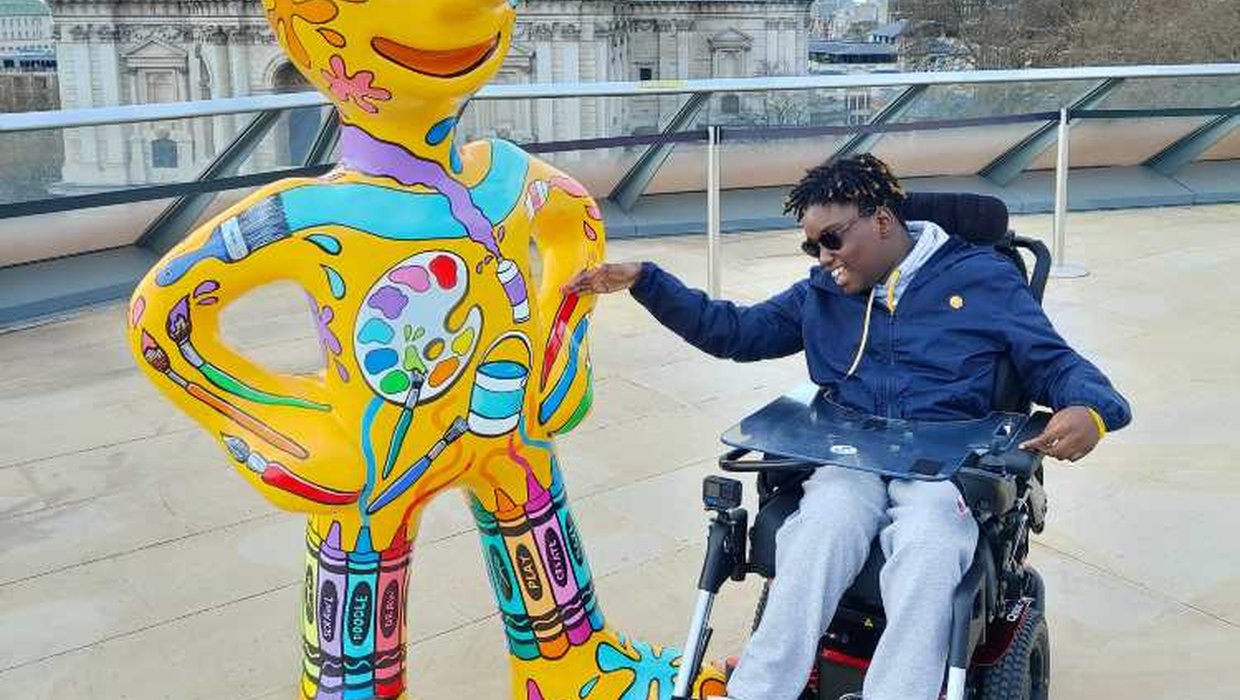
Kashyani is a young person with cerebral palsy whose confidence and determination come through clearly when she talks about her life and what support has made possible. As he says: “I have cerebral palsy, although my condition affects all my four limbs, I try not to let it affect me mentally.”
2. Help should never take away choice
Offering help can be kind. But grabbing someone’s wheelchair, moving their things, speaking for them or making decisions on their behalf is not helpful, it takes away choice and control.
Independence looks different for everyone. For one young person, it might mean travelling to school confidently. For another, it might mean choosing where to sit, how to join in, or when to ask for support. A simple question can make a big difference: “Would you like any help?” If the answer is no, respect it. If the answer is yes, ask what would be useful.
3. Accessibility is not a favour
Accessible spaces, inclusive activities and reliable transport are not special treatment. They are what make it possible for young disabled people to take part in school, friendships, work, hobbies and community life alongside everyone else.
Access is about more than getting through the front door. Can a young person move around inside? Can they sit with their friends? Can they use the toilet comfortably? Can they join in the same activities? Before organising an activity, event or trip, ask: who might be left out if access is treated as an afterthought?
4. Confidence grows when barriers come down
When the world is not designed with you in mind, everyday things can take extra planning and energy. Checking access information, arranging transport, asking for adjustments, managing pain or fatigue, or explaining your needs again and again can be exhausting.
When young people have the right equipment, accessible spaces and people who listen, they have more room to focus on learning, friendships, creativity, fun and ambition.
For Logan, aged 12, who has quadriplegic cerebral palsy, the right powered wheelchair is about much more than getting from one place to another. It gives him freedom to enjoy doing things his own way. “It just lets me go so fast... I feel free.”

5. Speak to us, not over us
Disabled young people should be part of the conversations and decisions that affect their lives. That includes school trips, transport, healthcare, equipment, activities, public spaces, campaigns and services. Good inclusion is shaped with young people, not for them without asking.
Speaking directly to a young person matters. Do not assume someone cannot understand, respond or have something important to say. Communication can take many forms, and every young person deserves to be addressed with respect.
6. We're more than awareness stories
Young people with cerebral palsy are students, gamers, artists, athletes, music fans, campaigners, friends, siblings, jokers, problem-solvers and future leaders. They have opinions, goals and talents that go far beyond a diagnosis.
World Cerebral Palsy Day is a chance to raise awareness, but awareness should lead to action: better access, stronger representation and more listening to the young people whose lives are affected by the decisions being made.
For Kashyani, that support has opened up new possibilities: “Whizz Kidz have given me the opportunity to go to many places and do many things I never knew was possible before.”
This World Cerebral Palsy Day, listen, then act
Instead of assuming what someone can’t do, ask what would make participation possible. Instead of deciding what independence should look like, ask what choice means to that young person. And instead of limiting awareness to one day, think about what could change around you, at your school, workplace, local venue, on transport or in your community.
At Whizz Kidz, we believe young wheelchair users should have the freedom to lead the lives they choose. This World Cerebral Palsy Day, we’re asking everyone to listen to young disabled people, challenge barriers when they see them and help create a world where disabled young people are not just included in the conversation, but lead it. Because inclusion is not about speaking for young disabled people, it is about making sure they have the power, access and opportunity to speak for themselves.