


Travelling by underground, metro or light rail as a wheelchair user
Learn how to use underground, metro and tram systems confidently. Practical advice, accessibility guidance and legal info for wheelchair users travelling in UK

Inner city and in a hurry? Underground, metro or light rail is a speedy option for getting to your destination, but there are a few things wheelchair users need to know.
Here, we’ll offer some tips on how to navigate city-centre rail services as a wheelchair user and explain what restrictions and rights apply. We’ve also included some essential tips from our Youth Board experts.
In this guide we’ll cover:
- Restrictions and challenges when travelling by light rail, metro or underground
- Accessibility features you can expect
- Getting on and off light rail, metro or underground
What is light rail/metro and where will you find them?
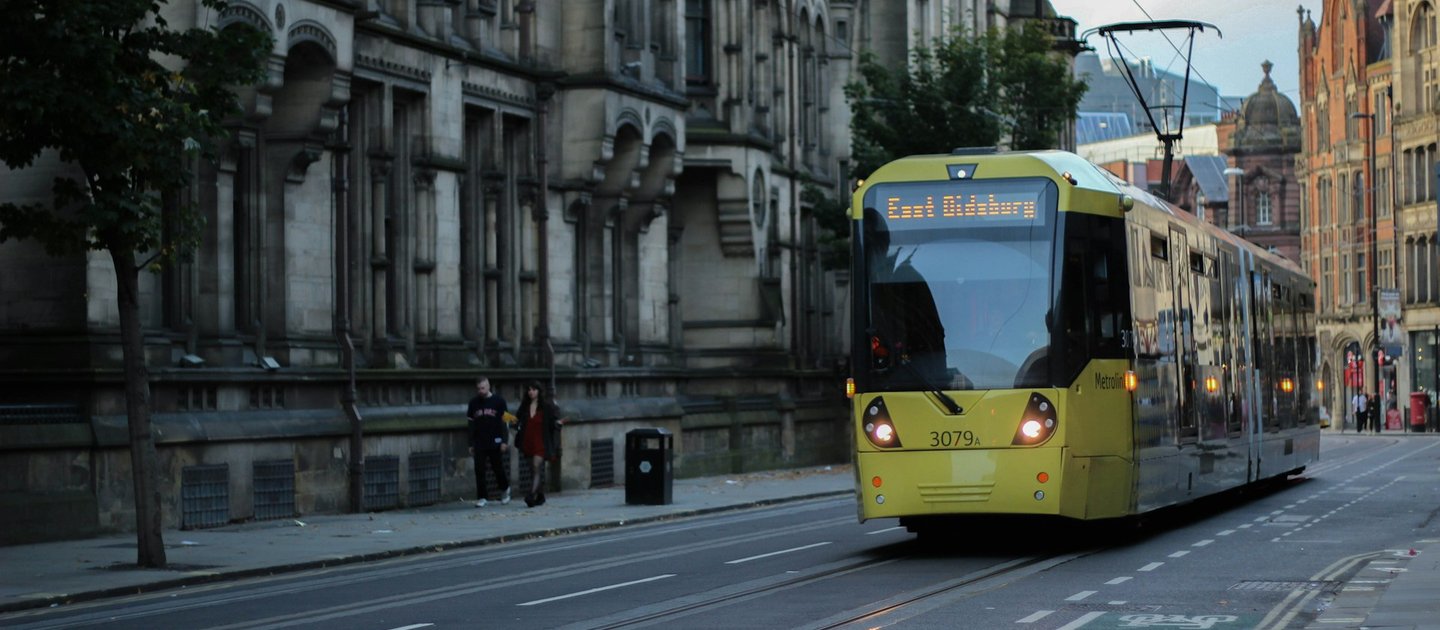
Light rails and metros are modern electric trains or on street trams and you’ll usually find them in big cities. They offer a fast, convenient way for most people to get from A to B – but they can pose some challenges for wheelchair users.
Here’s a list of cities in the UK with light rail and metro systems in place:
- Blackpool Tramway
- Docklands Light Railway (London)
- Edinburgh Trams
- Glasgow Subway
- London Trams (Croydon Tramlink)
- London Underground
- Manchester Metrolink
- Nottingham Express Transit
- Sheffield Supertram
- Tyne & Wear Metro
- West Midlands Metro
Each of these providers operates independently. If you’re planning on using one of theses services, it’s a good idea to check out their sites and learn about their policies no wheelchair travel.
What you need to know about travelling by underground, metro or light rail as a wheelchair user
Buying tickets
First things first, let’s talk fares. A Disabled Persons Railcard can save you a third off standard and first class rail fares. That includes some London Underground and DLR services for both you and a companion.
The London Freedom Pass offers free travel on Transport for London (TfL) services including Underground, Overground, DLR and trams.
In other areas, local authorities sometimes offer free or discounted travel locally. You’ll need to check their websites for details.
Getting on and off
Unfortunately there isn’t a single national set of rules on access that apply to light rail and underground trains, so you might find that the levels of accessibility are different depending on where you are in the country.
Driverless trains and unstaffed stations in some cases mean that if you do need support, there may not be anyone around to help you.
Fewer than half of London Underground stations offer step-free access. A similar number offers no level boarding. This means wheelchair users need a boarding ramp to get on the trains.
The TFL website has a step-free tube map and there’s also a page that includes up to date information on the lifts and escalators at each station.
If you’re a wheelchair user travelling on the Tube, London Overground or Elizabeth Line, you can use a service called Turn-up-and-go (TUAG), which means you can ask a member of staff to help you board the train or meet you at your destination and don’t have to pre-book assistance. As part of this, staff can:
- Let you know if there are unplanned disruptions and suggest alternative step free access routes
- Accompany you from the ticket hall to the platform and help you board the train
- Help you get off the train at any interchange stations and board the next train
- Help you get off the train when you arrive at your final destination, and accompany you back to the ticket hall
- Arrange a mini-ramp or boarding ramp, if required (and available)
If for any reason they cannot offer you turn up and go assistance (or step-free access is unavailable) they will help you to plan an alternative step-free journey to get where you need to.
If you prefer to plan in advance, you can book passenger assistance ahead of time on the Elizabeth Line, London Overground or 30 tube stations via Passenger Assist.
According to information from Transport For All, all stations and vehicles on Nottingham Express Transit, Tyne and Wear Metro, West Midlands Metro, Sheffield Supertram, Manchester Metrolink, and Blackpool Tramway are wheelchair accessible. Unfortunately, its users report mixed experiences with accessibility.
Accessible spaces on underground, metro or light rail
Most Tube, DLR, and train services have designated wheelchair spaces. These are often marked with a wheelchair symbol on the outside of the carriage. Newer trains like the Elizabeth Line in London have wider doorways to aid boarding.
Some stations have raised areas on the platform to allow level boarding for wheelchair users. Some reduce the gap between the train and platform edge, while others only offer access via a manual boarding ramp, which staff will need to lay out for you.
It’s a mixed picture when it comes to accessible toilets. You won’t find them on the trains and not all stations have them. You’ll need to research before you travel or ask at the station when you arrive.
Expert tips from our Youth Board
Our Youth Board have shared some expert tips based on their experiences of train and tube travel across the UK.
- Check how accessible stations are before you travel: Some are good, some bad (and some ugly) so always check how accessible a station is before you travel, say the Youth Board.
- Book assistance if you can: It’s always a good idea to book assistance in advance where possible to ensure you have the support in place when you need it.
- Don’t worry if you can’t book: You have a right to ‘turn up and go’ even if you haven’t booked assistance.
- Use the emergency call button if you need it: An assistance failure is a reason to use the emergency call button, so don’t be afraid to use it.
- Pick the best position on the train: Some train stations have roll-on roll-off sections in the middle of the platform. If yours does, it’s important to pick the right place on the train.
- Check lift access before you need them: Online lift checkers can tell you if lifts are currently working at a station you plan to visit. While information may not be 100% accurate or up-to-date, they’re a useful resource, say our Youth Board.
- If the lift is closed, you’ll get support: If a lift closure means that you are unable to complete your planned journey, TfL should provide an alternative solution to help you to reach your destination. This may be using an alternative service, such as a bus, or by providing a taxi at TfL cost.
Round up
Light rail, metro and underground trains can offer a speedy way to navigate big cities but it’s not always straightforward for wheelchair users.
That doesn’t mean you shouldn’t use them. Instead, do some research on what is and isn’t provided and plan accordingly.
Here’s a round up of what we’ve covered:
- Discounts on fares may be available for wheelchair users
- Not all stations/stops are fully accessible, so check before you travel
- There are accessible spaces on trains and trams and they’ll be clearly marked outside the vehicle
- Booking assistance ahead of time is recommended, certainly on London Underground at least
Back to Information Hub Home
Back to Everyday Life


Keep in touch
Receive the latest updates and resources from Whizz Kidz